Medium-c
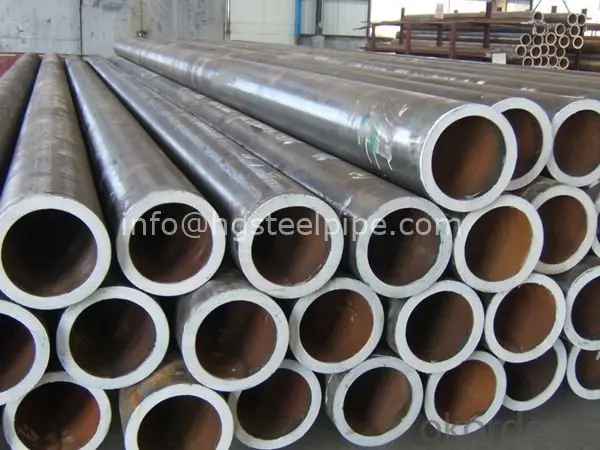
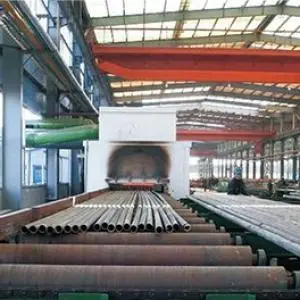
arbon steel pipes are steel pipes with a carbon content typically ranging from approximately 0.25% to 0.60%. Their primary characteristic is that they possess significantly higher strength and hardness than low-carbon steel, though this comes at the cost of reduced plasticity and weldability. Consequently, their application logic differs fundamentally from that of low-carbon steel pipes: while low-carbon steel pipes are prioritized for their formability and weldability, medium-carbon steel pipes are utilized primarily for their high strength. They are employed in the manufacture of mechanical components subject to heavy loads or requiring wear resistance, and they generally require heat treatment to achieve optimal performance.
Performance Characteristics: Balancing Strength and Processability
The performance of medium-carbon steel pipes presents a distinct trade-off—a critical factor to consider during material selection.
Their primary advantages are strength and hardness. Taking the widely used "45# steel" (a common medium-carbon grade) as an example, its tensile strength is at least 600 MPa—significantly higher than the 355–500 MPa range typical of "20# steel" (a low-carbon grade). Through a process of quenching and high-temperature tempering (known as "quenching and tempering"), medium-carbon steel can achieve an excellent balance of mechanical properties—specifically, an optimal combination of strength, plasticity, and toughness—making it well-suited for high-load applications.
Conversely, these steels have limitations regarding welding and forming. Medium-carbon steels generally exhibit poor weldability. Engineering data indicates that for certain medium-carbon steel pipes with a carbon equivalent exceeding 0.6%, the heat-affected zone (HAZ) is prone to forming brittle, hardened microstructures during welding, which creates a risk of cold cracking. Therefore, they are typically avoided for fluid-conveying pipelines or structural components that require extensive welding. Furthermore, their capacity for cold-forming is inferior to that of low-carbon steel.
Primary Application Areas
Given these characteristics, medium-
carbon steel pipes are primarily used in the fields of mechanical engineering and machinery manufacturing.
Mechanical Manufacturing and Transmission Components: This is the core application area for medium-carbon steel pipes. "45 steel" pipes are frequently used to manufacture shafts, gears, bolts, nuts, collars, and various other structural components. In the realm of precision machinery, they are also employed for high-load, critical components such as hydraulic cylinder barrels, piston rods, and machine tool spindles. In such scenarios, the primary requirements are load-bearing capacity and wear resistance, rather than weldability or formability (bendability).
Boiler and heat-exchange equipment (under specific standards): Similar to the A179 standard for low-carbon steel, there are corresponding standards for medium-carbon steel boiler tubes, such as ASTM A210. This standard covers seamless medium-carbon steel boiler and superheater tubes designed for high-temperature, high-pressure environments. It should be noted, however, that such applications impose specific requirements regarding high-temperature performance and manufacturing processes; therefore, standard medium-carbon steel pipes cannot simply be used as direct substitutes.
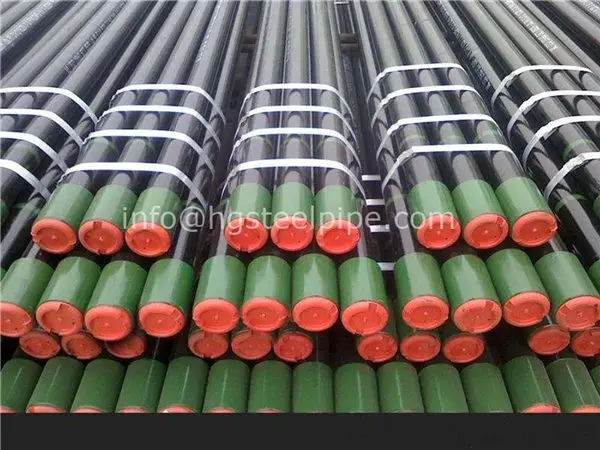
Fluid transport in restricted or specialized scenarios: In principle, medium-carbon steel pipes are not recommended for fluid transport, particularly in piping systems that require welded connections. In certain exceptional cases—for instance, when medium-carbon steel oil-well casing was used as a temporary substitute for low-
carbon steel pipe to construct oil pipelines due to supply shortages—strict welding procedures and quality inspection measures had to be implemented to ensure safety. This represents an unconventional, stopgap measure rather than a standard or routine application.