ASTM A269: Seamless and Welded Austenitic Stainless Steel Tubing for General Service
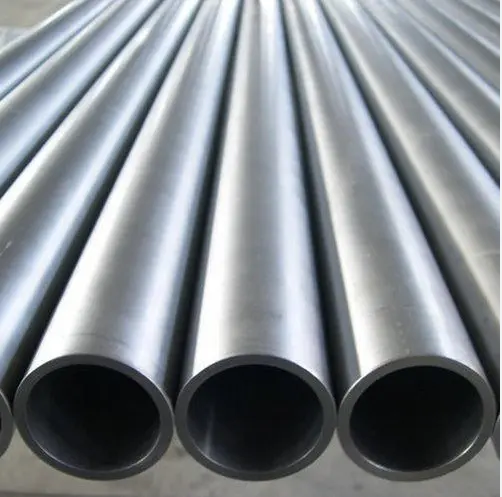
This standard applies to seamless and welded austenitic stainless steel tubing intended for general corrosion-resistant service and for low- or high-temperature environments.
Core Positioning: Highly versatile; it is the default choice for many industrial piping systems (including some hydraulic lines).
Manufacturing Process: Covers both seamless and welded processes.
Material Condition: All tubing must be delivered in a heat-treated condition; hardness is typically required to be below 90 HRB.
Testing Requirements: Each tube must pass non-destructive electric testing or hydrostatic testing; mechanical property tests—such as flaring, flanging, hardness, and reverse flattening—are also included.
ASTM A213: Seamless Ferritic and Austenitic Alloy-Steel Boiler, Superheater, and Heat-Exchanger Tubes
This standard is specifically designed for high-temperature and high-pressure environments, with clearly defined application scenarios.
Core Positioning: Primarily used for boilers, superheaters, and heat exchangers; requires extremely high high-temperature creep strength.
Manufacturing Process: Limited to seamless processes; typically supplied in a hot-finished or cold-finished condition.
Special Grades: Grades designated with the letter "H" (e.g., TP304H) offer higher creep-rupture strength and are suitable for more demanding high-temperature service conditions.
Size Range: Typically supplied in sizes ranging from 1/8-inch inside diameter to 5-inch outside diameter.
Key Differences and Selection Guide
The critical differences lie in the manufacturing process and intended applications:
A269 focuses on general service and corrosion resistance: If you require welded tubing, or if the application emphasizes general corrosion resistance rather than extreme temperatures, A269 is the more flexible choice.
A213 focuses on high-temperature service and pressure containment: If your application involves critical high-temperature components like boilers or heat exchangers, and seamless tubing is required to ensure reliability, then A213 is the more specialized standard. In practical hydraulic systems—particularly instrumentation piping—A269 is frequently used for mildly corrosive fluids and low-temperature environments due to its versatility (which encompasses welded tubing); the A213 standard is specified only when the piping must withstand higher temperatures or serve as a critical heat-exchange component.