The core reason for using beveling on
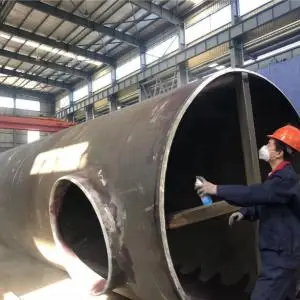
steel pipes is to ensure weld quality, especially when the pipe wall is thick. Simply put, beveling involves machining a groove of a specific geometric shape at the end of the steel pipe to be welded, creating the necessary conditions for a high-quality weld.
There are several main reasons behind this:
1. Ensuring Full Penetration and Avoiding Incomplete Penetration
For steel pipes with a wall thickness exceeding a certain limit (e.g., 3mm), directly welding two flat pipe ends together makes it difficult for the welding heat to transfer to the center of the joint, resulting in incomplete melting at the root and the serious defect of incomplete penetration. Beveling (such as V-shapes or U-shapes) provides a space that allows the welding torch to penetrate deep into the root of the joint, ensuring complete penetration from top to bottom.
2. Optimizing Weld Performance and Quality
The shape and angle of the beveling directly affect the quality of the final weld:
Improving Weld Formation: By optimizing the beveling angle, the weld reinforcement can be better controlled, allowing for a smooth transition with the base material and avoiding potential problems such as cracks caused by stress concentration.
3. Preventing Defects such as Slag Inclusions: When welding thick-walled
steel pipes, a suitable bevel design (such as a composite bevel) helps slag float to the surface, effectively reducing internal defects such as slag inclusions and incomplete fusion.
4. Adapting to Special Working Conditions: In certain specific scenarios, bevel design is specifically tailored to meet stringent performance requirements. For example, when welding dissimilar steel pipes (such as stainless steel and heat-resistant steel), an asymmetric bevel design allows for precise control of the chemical composition at the weld root to meet special requirements such as corrosion resistance.
5. Bevel Design Requires Careful Consideration: While bevels are essential, their design requires careful consideration. A larger bevel angle, while making penetration easier, consumes more welding material, increases time and cost. Therefore, engineers need to select the most suitable bevel type (such as V-groove, U-groove, X-groove, etc.) and size based on the steel pipe material, wall thickness, welding method, and performance requirements to achieve the optimal balance between quality and efficiency.