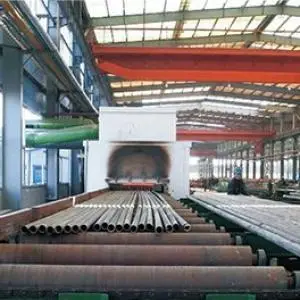
The steel pipe bending test is a fundamental mechanical property test used to evaluate the plastic deformation capacity and surface/internal integrity of steel pipes under bending loads. It does not directly measure strength indicators (such as tensile strength), but focuses on verifying the ductility and workmanship quality of the material. It is one of the key inspection items in steel pipe production and acceptance.
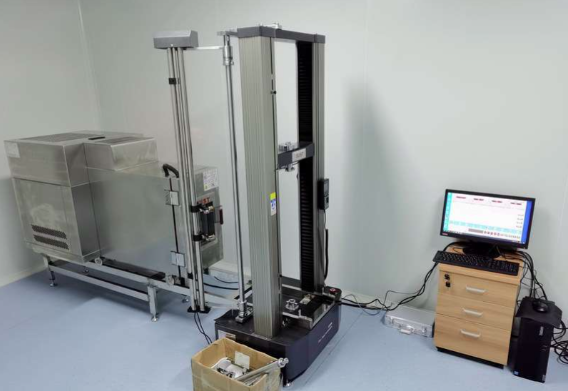
I. Test Purpose and Significance
**Verifying Plastic Deformation Capacity:** Assessing the ability of a steel pipe to undergo permanent bending under external force without cracking or fracturing. This is crucial for steel pipes requiring subsequent processing (such as cold bending, flaring) or those that may withstand bending loads during service.
**Revealing Material Defects:** Exposes surface or near-surface defects that may exist in the steel pipe during smelting, rolling, or welding processes, such as cracks, inclusions, folds, and incomplete penetration. These defects will propagate and manifest prematurely at points of bending stress concentration.
**Assessing Welded Joint Quality:** For welded steel pipes (such as straight seam welded pipes and spiral welded pipes), the bending test is an important means of verifying the bonding performance between the weld and the base material, weld toughness, and the presence of welding defects (such as porosity, slag inclusions, and cracks). Quality Control and Acceptance Standards: As mandatory or agreed-upon requirements of numerous domestic and international product standards (such as API, ASTM, GB, EN, JIS), these standards are the core of manufacturers' factory inspection and user acceptance.
II. Main Testing Standards
Tests must comply with specific international, national, or industry standards. These standards specify key parameters such as specimen dimensions, bending angle, indenter (mandrel) diameter, and speed. Common standards include:
General Material Testing: ASTM E190 (Guided Bending), ASTM E290, ISO 7438, GB/T 244 (Metallic Materials—Bending Test Method).
Steel Pipe Product Standards: API 5L (Line Pipe), ASTM A53/A106 (Carbon Steel Pipes for Structural and Fluid Transport), GB/T 3091 (Welded Steel Pipes for Low-Pressure Fluid Transport), EN 10219 (Cold-Formed Welded Steel Pipes for Structural Use).
III. Classification of Test Methods
Based on the type of steel pipe (seamless/welded) and the focus of inspection, the tests are mainly divided into the following two types:
Flattening Test:
Applicable Objects: Primarily used for welded steel pipes, especially small-diameter welded pipes.
Method Description: A specified length of pipe ring specimen is cut from the steel pipe. On a pressure testing machine or universal testing machine, it is flattened to a specified distance (H) between two parallel pressure plates in a direction perpendicular to the pipe axis.
Result Interpretation: The test checks for defects such as cracks, fissures, or incomplete weld bonding in the weld area and the base material under pressure deformation. The flattening distance H is usually related to the wall thickness and outer diameter of the steel pipe.
Bending Test:
Applicable Objects: Suitable for all types of steel pipes, more commonly used to evaluate the plasticity of the base material or prepared plate/strip specimens.
Specimen Forms:
Full Section Bending: For small-diameter, thin-walled pipes, a section of the pipe can be bent directly.
Strip Specimen Bending: More common. Strip specimens with rectangular cross-sections are cut from the steel pipe axially or transversely (the width is typically 1.5-2 times the pipe wall thickness, and the length meets the requirements of the bending device).
Bending Types:
Guided Bending: Using a grooved die, the specimen is guided to produce uniform deformation with a specific bending radius.
Three-Point Bending: The specimen is placed on two support rollers, with a pressure head applying downward pressure in the middle to bend it. The mandrel diameter (D) is the core parameter, usually expressed as a multiple of the specimen thickness (a) (e.g., D=3a).
Wrapped Bending: The specimen is tightly wrapped around a mandrel of a specified diameter to test its ability to withstand severe plastic deformation.
IV. Test Procedure (Taking the Three-Point Bending Test as an Example)
Specimen Preparation: According to standard requirements, cut, process, and mark the specimen from a designated location on the steel pipe (e.g., take a weld specimen at 90° or 180° of the weld, or a base metal specimen from the base metal area). Remove burrs.
Parameter Setting: Determine and set the bending angle (usually 180°), mandrel diameter (D), and support spacing according to standards or protocols.
Equipment Installation: Install a mandrel and support rollers of appropriate diameter on a universal testing machine or a dedicated bending testing machine.
Testing:
Place the specimen smoothly on the two supports, ensuring the bending force acts on the center of the specimen.
Start the testing machine, allowing the mandrel to descend at a uniform speed, applying pressure to the specimen to slowly bend it.
Continue loading until the specified bending angle is reached (e.g., 180°, i.e., the specimen is bent into a "U" shape).
Unloading and Observation: Remove the load and carefully remove the bent specimen.
V. Result Evaluation and Judgment
The test results are primarily qualitative assessments, not numerical results.
Visual Inspection: Carefully inspect the outer side of the bent specimen (the side under tensile stress) with the naked eye or a magnifying glass no more than 5x, especially the weld area, heat-affected zone, and base material.
Acceptance Criteria:
Pass: After bending, no cracks, fissures, or weld defects appear on the tensile surface of the specimen. Individual cracks of a certain length and depth, caused by minor defects at the specimen edge, are permissible (standards usually specify allowable values).
Fail: Obvious cracks, delamination, or weld cracks appear on the tensile surface, exceeding the standard allowable range. This indicates insufficient ductility of the steel pipe or the presence of internal defects.
Records and Reports: Record test parameters (mandrel diameter, bending angle), specimen information, and any observed defects. Report the final judgment.
VI. Application Areas
Oil and Gas Pipelines: Ensure pipelines have sufficient deformation capacity under laying, ground movement, or external impact.
Building Structures: Ensure scaffolding pipes and structural pipes are safe and reliable under load.
Mechanical Manufacturing: Verify the processing suitability of steel pipes used in manufacturing load-bearing components such as shafts and frames.
Pressure Vessels and Boilers: Inspect the processability of relevant steel pipes during forming and processing.
Automotive and Aerospace: Bending tests are conducted on high-strength steel tubes to evaluate their energy absorption and crashworthiness under lightweight design.