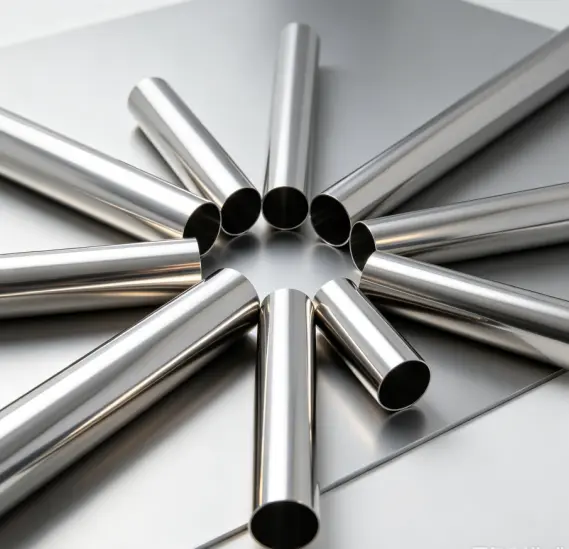
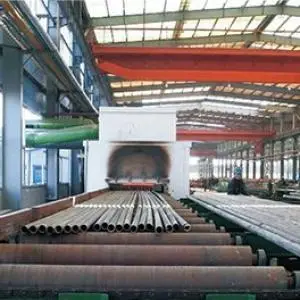
Steel Pipe Fittings: Why They Are the Superior Choice Over Iron Fittings
Date:2026-06-18
I. Fundamental Differences in Mechanical Properties
The distinction between steel and iron lies essentially in their carbon content: iron-carbon alloys with a carbon content of less than 2% are classified as steel, while those exceeding 2% are classified as iron. This difference in chemical composition directly dictates their vastly different mechanical properties.
Steel pipe fittings offer superior strength and toughness. Steel possesses a combination of toughness, elasticity, and rigidity, enabling it to withstand significant tensile stress and impact loads. In contrast, while iron fittings (particularly those made of traditional gray cast iron) exhibit adequate compressive strength, the material is brittle and has poor tensile and impact resistance; they are prone to cracking or even fracturing when subjected to severe vibration or external impact. This vulnerability is explicitly addressed in standards for high-risk industries such as oil and gas transportation, where the use of cast iron components in critical pressure-bearing applications is strictly prohibited.
Steel pipe fittings are better suited for high-pressure operating conditions. In applications such as high-pressure water systems and oil and gas gathering and transmission pipelines, steel fittings are the preferred choice due to their excellent pressure resistance. Relevant engineering standards specify that cast iron components should not be used for pipeline accessories; instead, components should be fabricated from forged steel, steel plate, seamless steel pipe, or straight-seam welded steel pipe to ensure safety under complex stress conditions.
II. Connection Reliability and Ease of Installation
Steel pipe fittings also offer distinct advantages regarding connection methods and installation efficiency.
Steel pipe fittings can be joined via welding to achieve a permanent seal. Welding is the preferred connection method for systems requiring high levels of sealing integrity and structural unity, such as oil and gas pipelines. Because steel fittings share the same or similar material properties as the piping itself, they allow for reliable welded connections where the joint strength matches that of the base metal. Conversely, iron fittings typically rely on threaded connections; while these are easy to install, their long-term sealing reliability is inferior under conditions involving high pressure, high temperature, or vibration.
Certain steel pipe fittings also offer the benefit of easy installation. For instance, steel single-ferrule tube fittings utilize a ferrule-based connection method, enabling high-pressure, leak-proof connections without the need for welding—a feature particularly advantageous for fire-sensitive, explosion-prone, and high-altitude work environments. This versatility makes steel fittings the preferred choice for precision piping systems in hydraulic and pneumatic applications.
III. Corrosion and Wear Resistance
The advantages of steel fittings become even more pronounced in environments involving corrosive media or abrasive operating conditions.
Stainless steel fittings offer exceptional corrosion resistance. For piping systems transporting corrosive fluids or operating in humid, acidic, or alkaline environments, stainless steel fittings (such as grades 304 or 316L) provide a service life far exceeding that of standard iron fittings. Even when galvanized, iron fittings cannot match the corrosion resistance of stainless steel.
Steel fittings allow for composite wear-resistant designs. In high-abrasion sectors like mining and metallurgy, the inner walls of steel fittings can be lined with a cast aluminum-silicon wear-resistant layer to create an integrated, wear-resistant component. This significantly extends service life while offering lower weight and cost compared to thick-walled, wear-resistant cast iron parts.
IV. Safety Regulations and Technical Standards
In critical engineering sectors, the use of steel fittings is not merely a matter of performance preference but a requirement mandated by safety regulations.
In high-risk piping systems—such as those used for oil and gas gathering and transportation—national design codes explicitly prohibit the use of cast iron fittings, requiring steel materials instead. This is primarily because cast iron has a porous microstructure and low strength, and carries a higher risk of internal defects, making it unsuitable for meeting the safety standards required for pressure-bearing equipment. Furthermore, when handling corrosive media such as sour natural gas (containing hydrogen sulfide), steel fittings must undergo stress-relief heat treatment—a process that is virtually impossible to apply to brittle cast iron fittings.