Ultra-high-strength
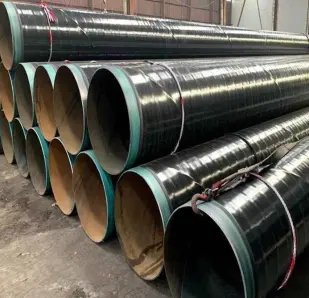
welded steel pipes, typically referring to high-performance steel pipes with a yield strength of not less than 690 MPa, have evolved from a laboratory specialty into a crucial pillar in fields such as oil and gas transportation, deep-sea development, and large-scale structural engineering. What advantages allow them to shoulder such a heavy responsibility?
A Revolutionary Balance Between Strength and Lightweighting
Traditional steel pipes face a classic dilemma: increasing strength often comes at the cost of increased wall thickness and sacrificed lightweight. Ultra-high-strength welded steel pipes, through advanced metallurgical technologies such as microalloying and controlled rolling and cooling, optimize the crystal structure at the atomic scale, achieving a qualitative leap in strength. This means that under the same pressure requirements, the pipe wall thickness can be significantly reduced. For example, compared to the traditional X70 steel, X80 steel can have a wall thickness reduced by approximately 12% under the same transmission pressure conditions. This "stronger yet thinner" characteristic directly brings a chain reaction of benefits, including reduced material costs, reduced welding energy consumption, and improved transportation and laying efficiency. In long-distance pipeline projects, the weight savings of thousands of tons translate into hundreds of millions of dollars in economic value.
A Performance Armor for Pushing Through Extreme Environments
Modern industry is constantly expanding into extreme environments—Arctic permafrost, deep-sea high pressure, and acidic corrosion. The value of ultra-high-strength steel pipes is highlighted here. Their high strength provides a safety margin against ground displacement and deep-sea pressure; by adjusting chemical composition and processes, excellent low-temperature toughness can be achieved, preventing crack initiation and propagation under -40℃ and even colder conditions; corrosion-resistant alloying design extends service life in harsh environments containing hydrogen sulfide and carbon dioxide. The successful application in major projects such as the Siberian Power Pipeline and the China-Central Asia Pipeline proves that they have become a reliable choice for energy strategic channels traversing complex geopolitical and natural environments.
Profound Advantages of Life-Cycle Economic Efficiency
From manufacturing to service, ultra-high-strength steel pipes demonstrate consistent economic rationality. Modern welding technologies, such as high-energy beam welding and laser-arc hybrid welding, can effectively solve problems such as cold cracking that easily occur in high-strength steel welding, ensuring that the joint strength matches the base material. Thinner pipe walls reduce welding time and material consumption, improving construction efficiency. During operation, its high strength allows for higher design pressures, directly improving transport efficiency; its excellent fatigue and deformation resistance reduces maintenance frequency and risk costs. Life-cycle cost analysis shows that although the initial material unit price is higher, its comprehensive benefits often reduce total investment costs by 10%-20%.
Hidden Contributions to Green and Safety Dimensions
Under the "dual carbon" target, the lightweighting of ultra-high-strength steel pipes directly reduces carbon emissions in steel production. Higher transport pressure means that smaller pipe diameters can be used for the same transport capacity, further saving resources. More importantly, its superior fracture control capabilities significantly improve the intrinsic safety level of pipeline systems, reducing the risk of environmental and safety accidents caused by material failure. This makes it not only an economic choice but also a carrier of environmental responsibility and safety commitment.