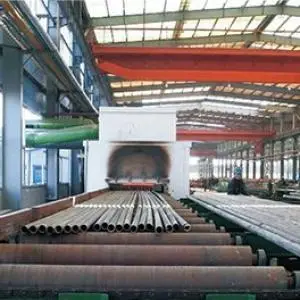
The core of corrosion resistance for
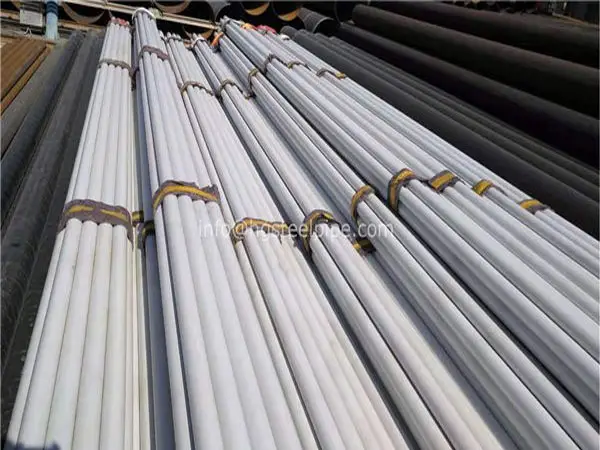
galvanized steel pipes lies in the zinc layer on their surface. The coating thickness directly determines the corrosion resistance life and applicable environment of the steel pipe. Improper selection can lead to either wasted costs (too thick a coating) or premature corrosion failure of the pipeline (too thin a coating). This article will systematically analyze the standards, characteristics, and corresponding application ranges of different galvanized coating thicknesses.
I. Measurement Standards and Common Classifications of Galvanized Coating Thickness
The thickness of the galvanized coating is usually expressed as the weight of zinc per unit area (g/m²), which can also be converted to the average thickness (μm). The approximate relationship between the two is: 7.1 g/m² ≈ 1 μm.
Major domestic and international standards clearly define the thickness of the galvanized layer. Common classifications are as follows:
According to Chinese National Standard (GB/T 3091-2015):
Ordinary Grade (Mín): ≥ 300 g/m² (≥55μm on one side)
Extra Thick Grade (Mín): ≥ 600 g/m² (≥85μm on one side)
Extra Thick Grade (usually specified in special requirements): Up to 1000 g/m² or more.
According to International/American Standard (
ASTM A123):
Depending on the thickness of the steel pipe, the minimum zinc coating weight is required to be between 305 g/m² and 915 g/m². Generally, the thicker the steel pipe, the thicker the required minimum zinc coating.
For ease of understanding and selection, the industry often classifies it into three application grades:
Light (or Conventional) Galvanized Layer: Zinc coating weight approximately 200 - 400 g/m².
Medium (or standard) galvanized coating: Zinc coating weight approximately 400-600 g/m². This is the standard choice for most outdoor and general industrial environments.
Heavy-duty (or thicker) galvanized coating: Zinc coating weight above 600 g/m², up to 1000 g/m².
II. Core Characteristics and Applications of Different Galvanized Coating Thicknesses
1. Light (Conventional) Galvanized Coating
Core Characteristics: Thinner coating, lowest cost, provides basic cathodic and barrier protection. Relatively shorter corrosion resistance life.
Typical Applications:
Dry Indoor Environments: Cable conduits, air ducts, ceiling joists, etc., inside buildings. These environments are free from rain and moisture, resulting in extremely slow corrosion rates.
Short-term or Temporary Facilities: Temporary protective pipes inside construction sites, temporary structures for exhibitions. Expected service life is less than 5 years.
Non-critical applications with extremely low corrosion resistance requirements.
Precautions: Strictly prohibited for outdoor use, in humid environments, or any environment with corrosive media; otherwise, red rust will quickly form.
2. Medium (Standard) Galvanized Coating (Most Widely Used)
Core Characteristics: The best balance of cost-effectiveness. Provides good corrosion protection, meeting the requirements of most conventional outdoor environments. It is the mainstream product of the national standard "ordinary grade".
Typical Applications:
Building Water Supply and Drainage Systems: Municipal and building outdoor water supply and drainage pipes. Effectively resists atmospheric rainwater corrosion.
General Outdoor Structures: Streetlight poles, traffic sign poles, outdoor railings, balcony handrails, etc.
HVAC Systems: Air conditioning ventilation ducts, heating pipes, especially suitable for non-coastal areas.
Low-Pressure Fluid Transportation: Industrial pipelines transporting non-corrosive gases and water.
Precautions: Suitable for environments with atmospheric corrosion ratings of C2 (low) to C3 (medium) (such as urban areas and general industrial areas). Its lifespan will be significantly shortened in coastal areas, high-humidity industrial areas, or near chemical plants. 3. Heavy-Duty (Thickened) Galvanized Coating
Key Characteristics: Extremely long corrosion life, providing the highest level of protection. Higher cost, slightly more difficult to process (e.g., affects thread precision).
Typical Applications:
Highly Corrosive Industrial Environments: Process piping and structural supports inside chemical plants, power plants, wastewater treatment plants, and coastal factories (high salinity, high SO₂, etc.).
Harsh Marine Environments: Bridge railings, dock facilities, and offshore platform ancillary structures in coastal areas (within 500 meters of the coastline).
Infrastructure and Long-Term Projects: Highway noise barriers, transmission towers, and long-term scaffolding systems (e.g., disc-lock scaffolding uprights).
Critical Firefighting Piping: For firefighting systems requiring extremely high reliability and long service life, especially fire pipes buried or in humid environments.
Buried Piping: In moderately corrosive soils (with appropriate wrapping), a thicker galvanized coating can effectively extend pipeline life.
III. Summary of Principles for Selecting Zinc Coating Thickness
Choosing the appropriate zinc coating thickness is essentially a balance between environmental corrosivity, expected service life, and economic cost.
Matching Environmental Corrosion Level:
Indoor dry environment → Light coating
Ordinary outdoor/urban environment → Medium coating
Industrial areas, coastal areas, high humidity, chemical environments → Heavy coating
Considering Service Life Requirements:
Temporary facilities (<5 years) → Light/medium coating
General building facilities (15-25 years) → Medium coating
Important infrastructure, long-term industrial facilities (>30 years) → Heavy coating or consider other forms of corrosion protection (such as spraying, epoxy coating, etc.)