ASTM A53 Standard's Differences in Seamless and Welded Pipe Specifications
Date:2026-01-23
1. Chemical Composition
Similarities: The requirements for carbon, manganese, phosphorus, and sulfur content for Grade A and Grade B are uniformly specified in the standard for each grade, regardless of manufacturing process.
Potential Differences: In actual production, the chemical composition of the base material for welded pipes may be slightly adjusted to meet subsequent process requirements (such as weldability) or mechanical performance requirements. However, this falls under the scope of steel mill processes, and the standard itself does not differentiate between them.
2. Mechanical Properties (Tensile Test)
Similarities: For the same grade (e.g., Grade B), the specified minimum tensile strength and yield strength are the same.
Important Difference - Specimen Sampling Location:
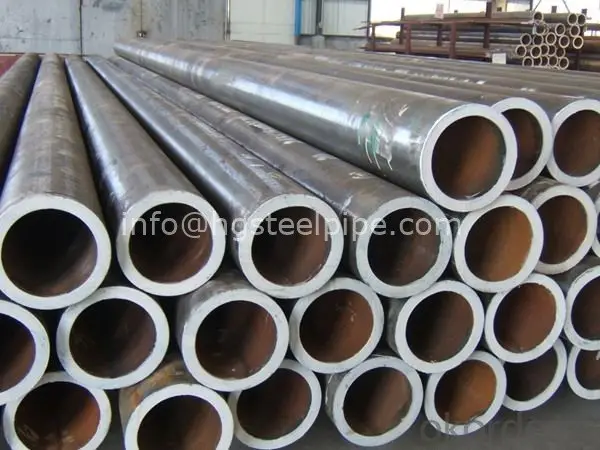
Seamless Pipe: Specimens should be taken from the pipe body, with no restrictions on location (usually longitudinal).
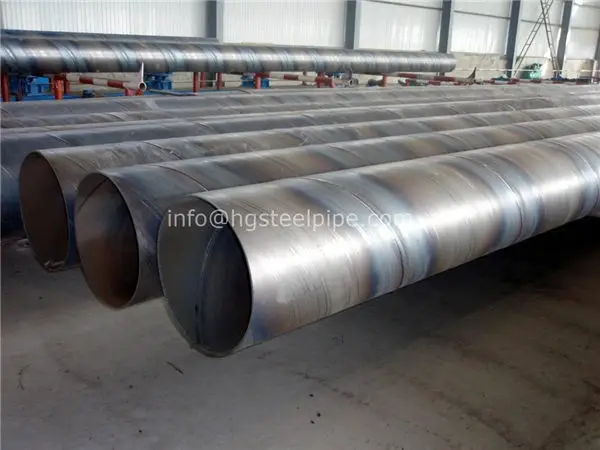
Welded Pipe: For welded pipes, the tensile specimen must include the weld seam. This is to verify that the strength of the weld area is not less than the requirements of the base material. The specimen should be taken transversely, with the weld seam located in the center of the specimen.
3. Hydrostatic Testing
Similarities: Both are mandatory acceptance tests. All A53 steel pipes must withstand the minimum water pressure specified in the standard, calculated based on size and grade, without leakage.
Significance: For seamless pipes, this primarily verifies overall tightness and pressure resistance. For welded pipes, it is a crucial means of verifying weld integrity and quality; any welding defects may be exposed under high pressure.
4. Non-Destructive Testing
This is the most fundamental difference, directly stemming from the presence of welds in welded pipes.
Seamless Steel Pipes: There are no mandatory non-destructive testing requirements for welds. Their quality is primarily ensured through process control, hydrostatic testing, and mechanical property testing.
Welded Steel Pipes:
Mandatory Requirement: All A53 welded pipes must undergo non-destructive testing (NDT) along the entire length of the weld.
Testing Methods: The standard allows the use of any of the following methods:
Eddy Current Testing: Commonly used for ERW pipes.
Ultrasonic Testing.
Radiological Testing.
Purpose: To detect continuous defects such as lack of fusion, cracks, and slag inclusions in the weld area. This is a crucial test to ensure the safety of welded pipes.
5. Bending Test (For Welded Pipes Only)
Seamless Steel Pipes: Bending tests are not required.
Welded Steel Pipes: For welded pipes with dimensions greater than NPS 4, the standard stipulates that a weld bending test (usually positive and negative bending) must be performed. After bending, the weld area must not exhibit cracks or openings exceeding the specified size. This is a critical test for directly assessing the weld's toughness and plasticity.
6. Flattening Test
Seamless Steel Pipes: Flattening tests are required to verify their overall plastic deformation capacity.
Welded Steel Pipes: Flattening tests are also required, but the specimen must include the weld, and the weld must be positioned at a 90-degree angle to the direction of force (i.e., the position of maximum force). This is specifically used to verify the bonding quality and crack resistance of the weld and base material during co-deformation.
7. Weld Treatment
For welded pipes, the standard allows for the grinding or removal of weld beads on both the inner and outer surfaces of the weld, provided that the wall thickness after grinding is not lower than the minimum allowable value in the standard.
Seamless steel pipes do not have this requirement.